Indian Schools in Qatar: A Guide to Curricula, Qualifications, and Choosing the Right School for Your Child

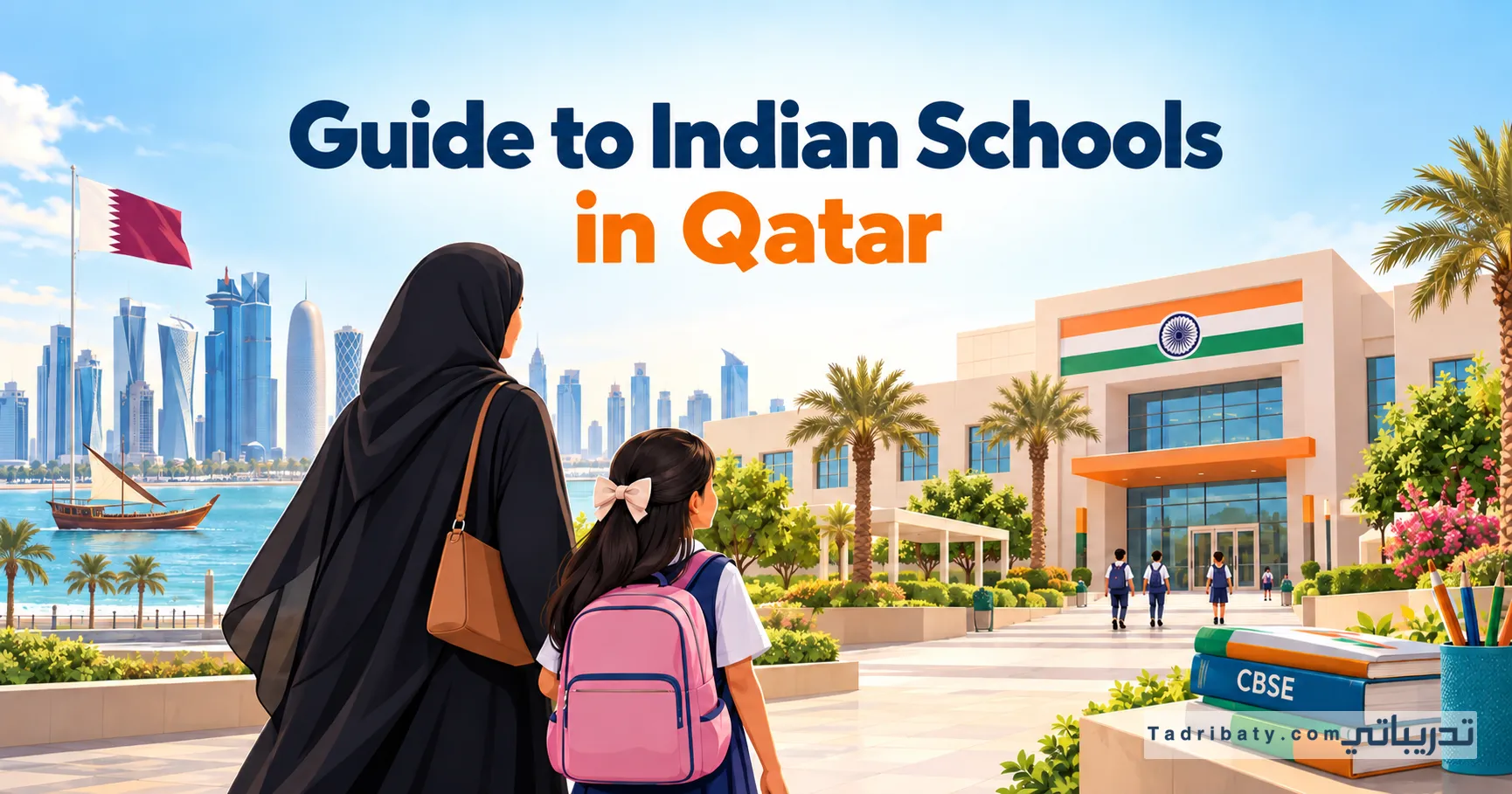
Indian schools in Qatar are an option for families who want their children to follow an Indian education system. An Arabic-speaking family may also consider one when it cannot find a suitable American or British school because of location, fees, or available places.
However, the description “Indian curriculum” is not enough to make a decision. It is important to check which education board the school follows, the language actually used in lessons, the languages the child will study, and the grades the school offers. This guide explains the main pathways and the questions that can help you compare schools before enrolling your child.
Is There Just One Indian Curriculum?
India has different education boards. Two pathways parents may come across are CBSE and ICSE/ISC:
| Pathway | Education board | What should you check? |
|---|---|---|
| CBSE | Central Board of Secondary Education | Check which grades and subjects the school offers, especially at secondary level. |
| ICSE and ISC | Council for the Indian School Certificate Examinations (CISCE) | ICSE is the Class 10 examination, while ISC is the Class 12 examination. |
When a school describes itself as “Indian,” ask which pathway it actually follows, which board it is affiliated with, and which grades that affiliation covers.
How Does Education at a CBSE School Work?
Students progress through the grades to Class 10 and then Classes 11 and 12. If your child is approaching secondary school, do not stop at confirming that a school follows CBSE. Ask for the list of subjects it offers in the higher grades and the requirements for choosing them.
You can review the curricula published for the 2026–2027 academic year on CBSE’s official academic website. The school itself remains the direct source for confirming which subjects and grades it offers.
What Do ICSE and ISC Mean?
Both qualifications are associated with the Council for the Indian School Certificate Examinations (CISCE). ICSE refers to the examination at the end of Class 10, while ISC refers to the examination at the end of Class 12.
If a school offers this pathway, check the specific grades and qualifications available there. Do not assume that a school offering the early grades necessarily continues through Class 12.
Are Indian Schools Suitable for Arabic-Speaking Students Who Want to Study in English?
If a family cannot find a suitable place at an American or British school, it may consider an Indian school that teaches its core subjects in English. This can be a suitable option, but the decision depends on both the school and the child. Studying in English does not mean that the child’s experience will be the same as it would be at an American or British school.
Start by asking about the language actually used in the classroom. Are mathematics, science, and other subjects explained in English? What language is used for homework, tests, and everyday communication? Then ask which other languages your child would need to study and whether the school offers suitable options for a student who does not speak Hindi.
CBSE curricula include several language subjects, but that does not mean every school offers every option. Review the subject lists on the CBSE website, then ask the school for the subjects available in your child’s particular grade.
Also consider how your child may adjust. A student moving from an American or British curriculum may need time to get used to a different approach to lessons, assessment, and homework. Ask how the school assesses new students and what support it provides if a student needs help with a subject or with English.
Five important questions to ask before enrolling:
- Are the core subjects taught and assessed in English in my child’s grade?
- Which languages must my child study? Are there options for students who do not speak Hindi?
- How will the school determine my child’s grade and level if they are transferring from another curriculum?
- What support does the school provide to new students as they settle in?
- Can we visit the classroom and speak with teachers before enrolling?
In short: An Indian school that teaches in English may offer a suitable pathway for an Arabic-speaking student when other options are limited. The school must meet the child’s needs, and the family should understand its language requirements. Visit the school and discuss your child’s situation before deciding.
How Do You Choose an Indian School in Qatar?
Start with a shortlist of schools that offer the required grade and are within a reasonable distance of your home. Ask each school the same questions so that you can compare their answers:
| What to compare | What to ask the school |
|---|---|
| Curriculum and affiliation | Does the school follow CBSE or CISCE? Which grades are covered? |
| Continuity | What is the highest grade the school currently offers? |
| Language of instruction and language subjects | What language is used to teach subjects and conduct assessments? Which languages will my child study? |
| Secondary school subjects | Which subjects are available in Classes 11 and 12? |
| Admission | How is the grade determined for a student coming from another curriculum? Is there an admission assessment? |
| Academic progress | How does the school inform families about a student’s progress and any difficulties? |
| Annual cost | What are the tuition fees and the costs of books, uniforms, transport, and any additional charges? |
| Activities and support | Which activities and support services are available for my child’s grade? |
If your child is transferring from another curriculum, ask the school to confirm the grade in which they are expected to be admitted in writing before completing enrolment or paying fees.
What About Arabic, Islamic Education, and Qatar History?
Private schools in Qatar are supervised by the Ministry of Education and Higher Education. A policy on mandatory subjects covers Arabic, Islamic Education, and Qatar History. It applies according to the relevant student groups and regulations, including those for community schools.
Ask the school which subjects your child will actually study, how many lessons they will have, and how they will be assessed. For official details, see the Ministry of Education and Higher Education’s announcement on mandatory subjects in private schools.
Where Can You Look for Indian Schools in Qatar?
Start by making a list of schools that suit your child’s age and your location. Contact each school to confirm its curriculum, grades, fees, and current availability. If you are also comparing schools that follow other curricula, read How to Choose a Private School for Your Child in Qatar to identify the criteria that matter most to your family.
Frequently Asked Questions About Indian Schools in Qatar
Is an Indian school suitable for an Arabic-speaking child who wants to study in English?
It may be suitable if the school teaches its core subjects in English, its other language requirements are manageable for your child, and it provides support to help new students settle in. Check these details for your child’s specific grade, as they vary between schools.
Do all Indian schools in Qatar follow CBSE?
Do not rely on the description “Indian school” to identify its curriculum. Ask which education board the school follows and which grades that pathway covers.
What is the difference between CBSE and ICSE?
CBSE is an education board that publishes secondary and senior secondary curricula. ICSE is a Class 10 examination administered by CISCE, which also administers the Class 12 ISC examination. Compare the grades and subjects offered by each school, as well as the name of its pathway.
Can my child transfer from an American or British curriculum to an Indian school?
A transfer may be possible, but grade placement and admission procedures depend on the student’s records, the school’s requirements, and the applicable regulations. Provide the child’s previous school reports and ask the school to clarify their expected grade before paying fees.
Do students study Arabic and Qatar History at Indian schools?
Qatar has a policy on mandatory subjects in private schools, including community schools. It applies according to the relevant student groups and regulations. Ask the school for the subject timetable that applies to your child, and consult the ministry announcement linked above.
Are the advertised tuition fees enough to compare schools?
No. Ask for a fee schedule covering books, uniforms, transport, registration, and any other charges. Read Private School Fees in Qatar: How to Calculate the Full Annual Cost Before Enrolling to build a clearer budget.
Before You Enrol
Go beyond asking, “Is this an Indian school?” Ask: Which pathway does it offer? What language is used to teach my child’s grade? Which other languages are required? What is the highest grade offered? How will the school support my child if they transfer from another curriculum?
Once you have a shortlist, visit the schools, request written details of fees and admission requirements, and check the school’s information through the Ministry of Education and Higher Education. These steps will help you compare schools against your child’s needs and your family’s education plans.
📚 Read Also
🏫 Related Articles and Guides
- How to Choose a Private School for Your Child in Qatar
- Private School Fees in Qatar: How to Calculate the Full Annual Cost
🔎 Find a School in Qatar
- Community Schools in Qatar
- Private Schools in Qatar
- Schools Portal in Qatar
- Educational Centers Portal in Qatar