Applying the DISC Model to Understand Teacher Personality Types and Improve Instructional Supervision

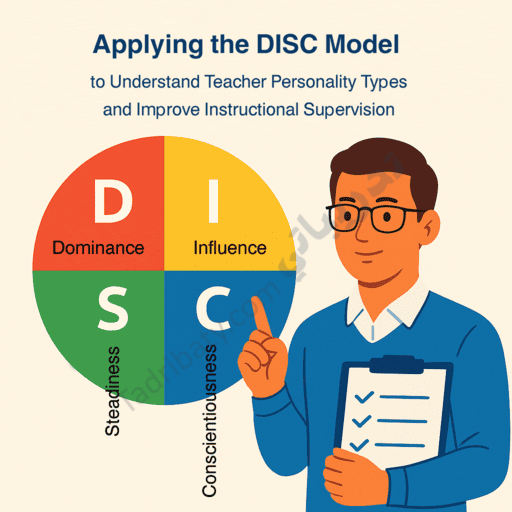
Applying the DISC Model to Understand Teacher Personality Types is a powerful approach in educational supervision, which is a delicate process based on understanding teachers’ needs, supporting them, and developing their classroom performance. As personality styles vary, methods of interaction, communication, and motivation differ from one teacher to another. This is where applying the DISC model becomes essential, as it is one of the most effective tools for analyzing personalities within educational institutions. It helps leaders and coordinators choose appropriate communication styles and provide effective, motivating feedback to teachers.
What Is the DISC Model?
The DISC model classifies human behavior into four main personality types. Each type has its own strengths, needs, and communication preferences:
| Type | Label | Key Traits | Description |
| D – Dominance | Decisive | Initiative – Leadership – Speed | Direct, fast-paced, prefers concise points, achievement-oriented |
| I – Influence | Influential | Social – Interactive – Positive | Friendly, enjoys teamwork, responds well to encouragement |
| S – Steadiness | Stable | Calm – Cooperative – Patient | Prefers clarity and stability, dislikes sudden change |
| C – Conscientiousness | Organized | Accurate – Analytical – Logical | Values details, follows rules, responds to facts and data |
The Importance of Applying DISC in Educational Supervision
1) Improving the Quality of Communication Between Coordinator and Teacher
Understanding each teacher’s personality type helps leaders to:
- Choose the appropriate tone of communication
- Organize feedback in a way the teacher can accept without resistance
- Reduce tension and increase openness during feedback sessions
2) Personalizing Support and Professional Development
A decisive teacher needs clear, fast action plans, while an analytical teacher requires detailed steps and data.
This personalization enhances the effectiveness of supervision and increases teachers’ commitment to improvement.
3) Building a Positive School Environment
When teachers feel understood and see that supervision aligns with their personality, motivation increases and resistance to change decreases.
4) Enhancing the Effectiveness of Feedback
Using the DISC model helps coordinators frame feedback in ways that suit each personality type, making it more acceptable and impactful.
How Should Supervisors Deal with Each Teacher Personality Type?
🔵 First: The Dominant Teacher (D)
Traits: Fast-paced, results-focused, direct
Best Communication Approach:
- Provide concise and direct feedback
- Start with key points, then move to details
- Link feedback to results rather than emotions
Sample Feedback:
“The way you organized group work was efficient and well-structured. A simple improvement to increase participation would be assigning roles to ensure every student is involved.”
🟡 Second: The Influential Teacher (I)
Traits: Social, enthusiastic, interaction-oriented
Best Communication Approach:
- Start with praise and enthusiasm
- Use positive language
- Highlight the impact on students
Sample Feedback:
“Your interaction was excellent and the lesson had great energy. We could make the activity even more effective by adding open-ended questions to engage all students.”
🟢 Third: The Steady Teacher (S)
Traits: Cooperative, calm, prefers stability
Best Communication Approach:
- Speak calmly and gradually
- Provide clear examples and practical guidance
- Avoid sudden changes
Sample Feedback:
“Your explanation style is very clear. A small suggestion would be to add more time for individual practice so students have greater opportunities to apply what they learn.”
🔴 Fourth: The Conscientious Teacher (C)
Traits: Precise, logical, analytical
Best Communication Approach:
- Support feedback with evidence or data
- Use formal, structured language
- Focus on quality and accuracy rather than emotions
Sample Feedback:
“Your lesson plan is very well-documented. To improve behavioral objective assessment, we suggest adding precise performance indicators to evaluate each activity.”
How Can Coordinators Use DISC in Feedback Sessions?
1) Before the Classroom Observation
- Identify the teacher’s likely personality type
- Prepare the appropriate communication approach
2) During the Classroom Observation
- Focus on instructional behaviors, not personal traits
- Record real evidence and observations
3) After the Observation (Feedback Session)
- Start in a way that suits the teacher’s type: concise (D), positive (I), calm (S), logical (C)
- Present improvement suggestions gradually and respectfully
- Agree on a clear action plan and shared commitment
Benefits of Applying DISC in Schools
- Strengthening trust between coordinators and teachers
- Improving the work environment and reducing conflicts
- Developing teacher performance based on individual needs
- Increasing student satisfaction through improved teaching quality
- Helping new leaders understand their teams more deeply
Using the DISC model is not merely a behavioral analysis tool; it is a strategic approach that enhances the role of the educational coordinator and enables a deeper understanding of teachers and their needs. When applied effectively, feedback sessions transform into genuine growth opportunities that support professional development and improve teaching practices within the school.
Read also:
• Skills of a Successful Educational Leader – A Practical Guide to Effective School Leadership
• Analyzing Teacher Performance in the Classroom (Clear Indicators and Evaluation Models)
• How Is a Teacher Performance Improvement Plan Built? (From Diagnosis to Follow-Up)
• Using Feedback to Improve Student Learning (Examples and Ready-to-Use Models)