How Does Artificial Intelligence Enhance Learning Inside the Classroom?

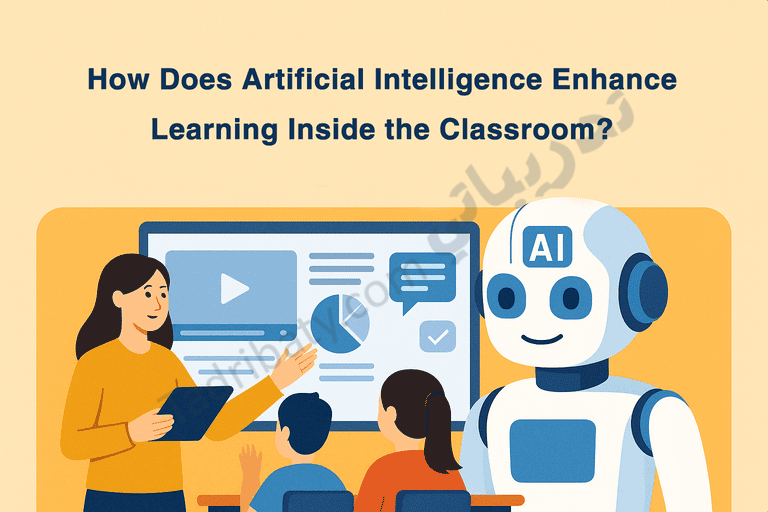
The education sector has witnessed unprecedented development in recent years due to digital technologies, with artificial intelligence emerging as a core component of the classroom learning process. This rapid transformation raises an important question: How does artificial intelligence enhance learning inside the classroom?
Artificial intelligence is no longer limited to technical applications or robotics; it has become a powerful tool for promoting active learning, supporting teachers, and personalizing instruction in ways that were previously impossible. As reliance on digital education increases, the importance of integrating AI into daily classroom practices continues to grow, making it a key driver in improving both educational quality and the overall learning experience.
What Is the Role of Artificial Intelligence in Education?
Artificial intelligence in education refers to the use of intelligent systems and algorithms to analyze data, understand learner behavior, and deliver content or activities tailored to students’ abilities. Its primary goal is to enhance learning quality and create a more interactive and efficient classroom environment.
How Does Artificial Intelligence Enhance Learning Inside the Classroom?
Personalized Learning for Students
Personalized learning is one of the most significant benefits of artificial intelligence in the classroom. AI-powered systems analyze student performance, identify strengths and weaknesses, and then:
- Deliver content suited to each student’s level
- Recommend additional practice when needed
- Automatically adjust the difficulty of activities
This personalized approach ensures that every student progresses according to their abilities, leading to deeper understanding and improved learning outcomes.
Providing Immediate Feedback
One of the main challenges in traditional classrooms is delayed feedback on student work. Artificial intelligence helps overcome this challenge by offering:
- Instant grading of assignments and activities
- Detailed analysis of student errors
- Personalized suggestions for improvement
This enables students to adjust their learning path immediately while allowing teachers to track classroom progress more effectively.
Supporting Teachers in Lesson Planning and Classroom Management
Artificial intelligence does not replace teachers; instead, it acts as an intelligent assistant that saves time and effort. Teachers can use AI to:
- Generate questions and assessments automatically
- Create data-driven interactive presentations
- Design lesson plans aligned with classroom performance levels
- Track attendance and participation automatically
Tools such as ChatGPT and Microsoft Copilot also help educators create learning activities and worksheets quickly and efficiently.
Enhancing Active Learning Inside the Classroom
Through interactive AI-powered tools, classrooms can be transformed into dynamic learning environments, including:
- Educational chatbots that interact with students
- Real-time classroom engagement analytics platforms
- AI-supported virtual reality simulations
- Intelligent educational games that enhance problem-solving and critical thinking skills
These tools significantly increase student motivation and engagement with learning content.
Facilitating Collaborative Learning
Artificial intelligence can track student contributions during group work and generate reports on:
- Individual participation levels
- Quality of collaboration
- Each student’s contribution to group tasks
This enables teachers to assess collaborative skills objectively and accurately.
Improving Time Management During Lessons
By analyzing real-time classroom data, artificial intelligence helps teachers:
- Identify activities that consume excessive time
- Allocate lesson time more effectively
- Detect moments of decreased student attention
As a result, teaching quality improves and classroom focus increases.
Supporting Students with Special Educational Needs
One of the most impactful roles of artificial intelligence in education is promoting inclusive learning through:
- Text-to-speech tools
- Speech-to-text technologies
- Personalized progress-tracking systems
- Real-time language and sign-language translation
These tools ensure that all students have equal opportunities to learn and succeed.
Conclusion
Artificial intelligence has become a fundamental pillar of education in the digital age. It enhances classroom interaction, supports active learning, and provides a more personalized and effective learning environment.
As AI tools in education continue to evolve, their role will become an essential part of every modern classroom, helping to prepare a generation equipped with critical thinking, creativity, and innovation skills.
Read also:
• Interactive Tools in Education and Their Role in Promoting Active Learning
• Useful Educational Platforms and Their Role in Developing the Educational Process
• Best Effective Study Strategies Before Exams
• Thinking Skills Every Student Needs for Academic Success