Addressing Individual Differences in the Classroom – Practical Strategies for Teachers

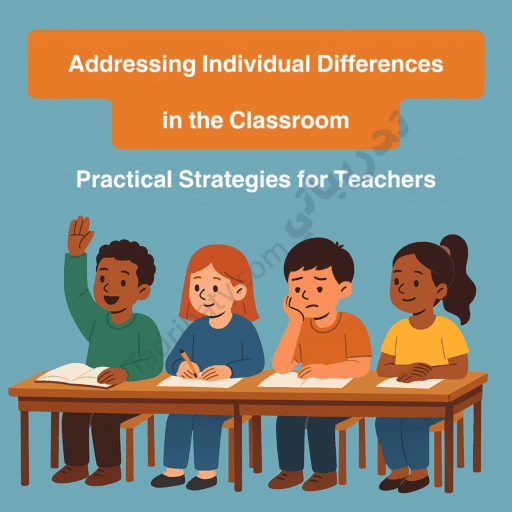
Individual differences among learners are one of the most significant challenges teachers face in the classroom. These differences are a natural reality that cannot be ignored. Addressing Individual Differences in the Classroom is a core teaching skill, as students vary in abilities, learning styles, pace of understanding, prior knowledge, motivation levels, interests, and personal preferences. However, teachers can turn this diversity into a powerful learning opportunity by applying effective strategies that respect student differences and increase engagement.
In this article, we present a practical guide to addressing individual differences in the classroom, with clear steps and real-world examples.
First: What Are Individual Differences?
Individual differences refer to natural variations among learners in areas such as:
- Intelligence levels
- Learning speed
- Academic background
- Preferred learning styles (visual, auditory, kinesthetic)
- Language skills
- Motivation and interests
- Ability to focus and self-discipline
Ignoring these differences leads to learning gaps, while addressing them creates a more equitable and successful learning environment.
Second: Why Is It Important to Address Individual Differences?
✔ Improves student understanding of content
✔ Increases learning motivation
✔ Ensures participation of all learners
✔ Raises achievement levels of low and average students
✔ Challenges advanced learners and expands their thinking
✔ Creates a fair and effective classroom environment
Third: Practical Strategies for Addressing Individual Differences in the Classroom
1- Using Pre-Assessment to Identify Student Levels
Differentiation begins with understanding learners’ starting points. Teachers can use:
- Simple pre-tests
- Introductory questions
- Quick diagnostic activities
- Self-assessment checklists
2- Flexible Grouping (Not Fixed Groups)
Types of groups may include:
- Support groups
- Enrichment groups
- Cooperative learning groups
- Core skills groups
Example (Division Lesson):
- One group practices step-by-step division
- Another solves word problems
- A third creates its own division problems
3- Varying Content Presentation Methods
Since students learn in different ways, teachers should use a mix of approaches such as:
- Short educational videos
- PowerPoint presentations
- Worksheets
- Classroom discussions
- Hands-on activities
Example (Parts of a Plant Lesson):
- One student watches a video
- Another reads a paragraph
- A third draws plant parts
4- Designing Multi-Level Activities
Instead of one worksheet for all students, design three levels:
- Easy: Direct application
- Medium: Analytical questions
- Advanced: Higher-order thinking (HOTS) activities
Example (Paragraph Writing):
- Arrange scrambled sentences
- Write a paragraph using guiding questions
- Produce a creative paragraph
5- Giving Students Choices (Choice Boards)
Allow students to choose how they demonstrate learning.
Example (Water Cycle Lesson):
Students may choose to:
- Draw a diagram
- Write an explanation
- Create a poster
- Record a short video
6- Using Varied Questioning Techniques
- Oral questions for students who struggle with writing
- Written questions for fast learners
- Higher-order questions for advanced students
- Direct questions for students who need support
7- Providing Additional Time When Needed
Allowing flexible time does not mean unfairness—it respects different learning paces.
8- Promoting Self-Directed Learning
Teachers can use simple platforms such as:
- YouTube Kids – Educational videos
- Quizizz – Self-paced practice activities
- Google Classroom – Individual assignments
9- Providing Level-Appropriate Feedback
- Direct support for struggling students
- Targeted improvement feedback for average learners
- Enrichment tasks for advanced students
Fourth: Classroom Application Examples
📌 Example 1 – Arabic Language
Objective: Identify the main idea of a text
- Group 1: Multiple-choice questions
- Group 2: Extract the main idea from the text
- Group 3: Write an alternative main idea (creative thinking)
📌 Example 2 – Mathematics
Lesson: Multiplication
- Group 1: Direct multiplication problems
- Group 2: Word problems
- Group 3: Create real-life multiplication problems
📌 Example 3 – Science
Lesson: Earth’s Rotation
- Group 1: Read a summary paragraph
- Group 2: Watch a video
- Group 3: Perform a hands-on activity using a lamp and a ball
Fifth: Tools That Support Differentiated Instruction
- Nearpod – Multi-level interactive lessons
- ClassPoint – Instant questions and level analysis
- Canva – Create differentiated worksheets
- Kahoot / Quizizz – Easy interactive activities
- Google Classroom – Assign differentiated tasks to students
Conclusion
Addressing individual differences in the classroom is not an extra burden for teachers; it is a professional skill that ensures fair and effective learning for all students. When teachers apply differentiation strategies thoughtfully, they will notice higher student engagement, improved understanding, and increased motivation toward learning.
Read also:
• Differentiated Instruction – Practical Steps and Classroom Examples
• Analyzing Teacher Performance in the Classroom (Clear Indicators and Evaluation Models)
• Using Feedback to Improve Student Learning (Examples and Ready-to-Use Models)
• Ready-to-Use Classroom Activities for Teachers (Immediately Applicable in the Classroom)