Life Skills Every Student Should Learn (A Practical Guide for Schools and Families)

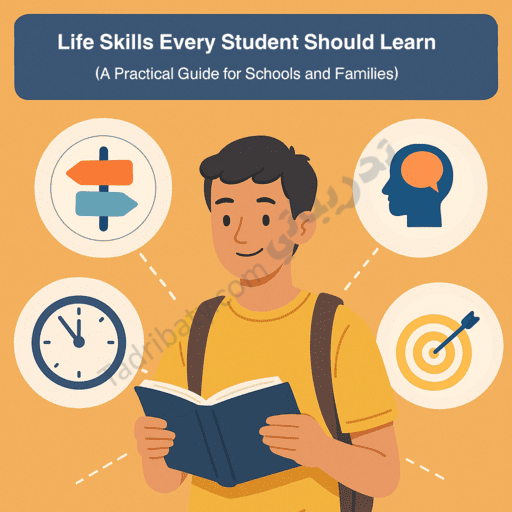
Life Skills Every Student Should Learn have become essential foundations that are just as important as academic achievement itself. Today’s student does not only need theoretical knowledge, but also practical skills that help them adapt to life, make sound decisions, build positive relationships, and prepare for future academic and career demands. In this practical guide, we highlight the most important life skills with clear roles for both schools and families in developing them.
First: Thinking and Problem-Solving Skills
One of the most important Life Skills Every Student Should Learn is the ability to think logically and analytically.
These skills include:
- Analyzing problems instead of avoiding them
- Asking the right questions
- Evaluating alternatives and making decisions
The school’s role:
- Providing problem-based learning activities
- Encouraging discussion and dialogue in the classroom
The family’s role:
- Involving students in solving simple daily problems
- Avoiding giving ready-made solutions all the time
Second: Effective Communication Skills
Good communication is the cornerstone of academic and social success.
It includes:
- Expressing opinions with confidence and respect
- Active listening to others
- Accepting differences
The school’s role:
- Group work activities and presentations
- Training students in dialogue and respect for different viewpoints
The family’s role:
- Creating safe spaces for open dialogue at home
- Encouraging students to express their feelings and ideas
Third: Time Management and Self-Organization
It is impossible to talk about Life Skills Every Student Should Learn without addressing time management.
These skills include:
- Setting priorities
- Commitment to deadlines
- Balancing study and rest
The school’s role:
- Teaching students how to plan assignments and projects
- Breaking long-term tasks into manageable steps
The family’s role:
- Helping students create daily or weekly schedules
- Reinforcing commitment without excessive pressure
Fourth: Emotional Intelligence and Relationship Building
Emotional intelligence is one of the life skills that directly affects student behavior and interaction.
It includes:
- Understanding and managing emotions
- Empathy with others
- Managing conflicts in a positive way
The school’s role:
- Psychological support programs and social activities
- Teaching conflict resolution skills
The family’s role:
- Parents serving as role models in emotional self-control
- Teaching students to express emotions in a healthy manner
Fifth: Responsibility and Independence
Among the Life Skills Every Student Should Learn is taking responsibility for one’s actions and decisions.
These skills include:
- Self-reliance
- Commitment to duties and tasks
- Acknowledging mistakes and learning from them
The school’s role:
- Assigning classroom tasks and responsibilities
- Encouraging individual initiatives
The family’s role:
- Giving students space to make age-appropriate decisions
- Building trust instead of excessive protection
Sixth: Teamwork and Respect for Others
Working within a team is a fundamental skill for practical life.
It includes:
- Cooperation and sharing roles
- Respecting different perspectives
- Achieving common goals
The school’s role:
- Group projects and collaborative activities
- Evaluating teamwork skills, not only final results
The family’s role:
- Encouraging participation in group activities
- Teaching respect for rules and others
Developing Life Skills Every Student Should Learn is a shared responsibility between schools and families. When both work together with awareness and integration, we prepare confident, balanced students who are capable of facing life’s challenges with resilience. Investing in these skills today is a true investment in our children’s future tomorrow.
Read also:
• Thinking Skills Every Student Needs for Academic Success
• Educational Games to Develop Thinking and Problem-Solving Skills (Ready to Use)
• Simple Ways to Improve Focus and Understand Lessons Better
• Ready-to-Use Educational Competitions for Schools (Ideas and Diverse Activities)